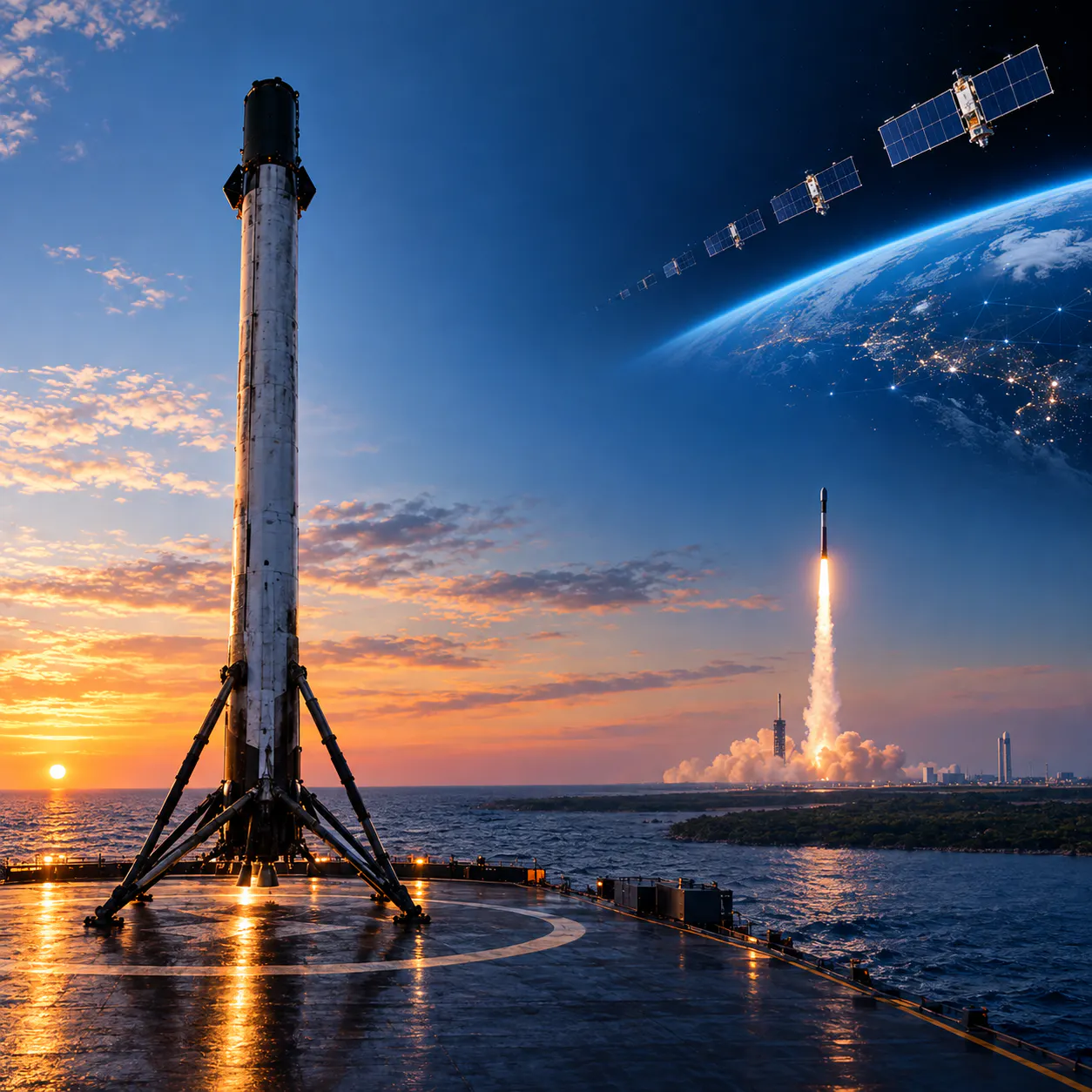
A Falcon 9 first stage has now flown 28 times. Booster B1080 reached that figure on 14 July 2026, carrying 29 Starlink satellites from Cape Canaveral before landing on the autonomous droneship A Shortfall of Gravitas. The flight was also the 600th time SpaceX had launched a previously flown Falcon first stage. The figure describes something that would have been difficult to imagine when Falcon 9 first entered service, namely, recovered launch hardware becoming sufficiently reliable to form the ordinary operating basis of a high-frequency orbital launch programme. The broader figures reveal that SpaceX reported approximately 620 Falcon 9 orbital launches by 31 March 2026, with a mission success rate above 99%. During the first quarter of the year, 39 of 40 Falcon launches used flight-proven boosters, while 157 of the 165 Falcon 9 launches conducted during 2025 used previously flown first stages.Reuse has therefore moved beyond a demonstration of whether a rocket can survive re-entry. The relevant engineering question now is how many times a vehicle can be refurbished and returned to service without undermining the reliability on which customers and regulators depend.
A closer analysis reveals that a reusable first stage represents a capital asset that can support several missions, allowing some of the cost associated with manufacturing a new booster to be distributed across multiple flights. The economics do not follow automatically from the landing itself. Both recovery and launch infrastructure, as well as additional engineering work all carry costs, while every flight creates another opportunity for hardware failure. SpaceX has had an unusual advantage in testing that proposition because it has not needed to rely exclusively upon external customers to generate flight demand. A substantial proportion of Falcon 9 launches deploy Starlink satellites, giving the company a recurring internal customer for its own launch service. Research published in July 2026 estimates that roughly three-fifths of Falcon launches have carried Starlink and argues that the accumulated operational experience should have produced a substantial reduction in Falcon 9's real launch costs. The same analysis estimates that real launch costs may have fallen by approximately 70% between 2012 and 2026, while advertised launch prices declined by less than 6% in real terms. The finding confirms the assumption that technological efficiency necessarily becomes lower prices for customers. SpaceX operates at two points in the value chain: it sells launch services and operates one of the world's largest satellite constellations. The launch division can therefore accumulate experience through Starlink missions while the constellation benefits from access to a launch system whose schedule is not dependent entirely upon third-party demand. The commercial value created through reuse can consequently be retained within the wider corporate structure rather than appearing solely as a reduction in the price of an externally purchased launch.
Vertical integration can simultaneously reduce costs and improve coordination, whilst also providing a company with sufficient demand to justify investment in infrastructure. The policy concern arises when the same arrangement becomes difficult for competitors to replicate. A launch provider without a captive constellation must compete for customers before it has accumulated comparable flight heritage, while a constellation operator without its own launch capacity remains exposed to the availability and pricing decisions of external providers. The market advantage may therefore arise from the relationship between the two activities rather than from the launch vehicle alone. Government procurement introduces another layer. On 16 July 2026, SpaceX launched 21 satellites for the US Space Development Agency's Proliferated Warfighter Space Architecture, using another flight-proven Falcon 9 first stage.The mission illustrates how reusable commercial launch infrastructure is now carrying payloads associated with national security functions. Reliability (established through launch cadence and access to an established fleet consequently) has implications beyond commercial pricing. Where government programmes depend upon a particular provider's capacity, the resilience of the underlying service ultimately becomes a matter of public policy and international space law places the responsibility for managing these activities primarily upon States. Article VI of the Outer Space Treaty requires States Parties to authorise and continually supervise the activities of non-governmental entities in outer space. Article VII establishes international liability for damage caused by a space object, while the Registration Convention establishes obligations concerning objects launched into outer space.
The treaties do not distinguish between a reusable launch vehicle and an expendable one when allocating State responsibility. They regulate the conduct and consequences of space activities while leaving national authorities considerable discretion over how commercial operators are supervised. On the topic of domestic regulation, a licensing system designed around individual launches must accommodate vehicles that are repeatedly flown while continuing to establish responsibility for the launch operator and the State that authorises its activities. The regulatory question ultimately concerns the evidence required to demonstrate that the vehicle, operator and launch site remain compliant as operational experience accumulates and the vehicle's configuration changes. This is particularly relevant for countries attempting to establish their own launch industries. Japan's RV-X programme, discussed in the preceding article, illustrates the early technological stage of reusable launch development. SpaceX provides the later-stage example: repeated flights have generated commercial demand and an established regulatory history at a scale that a new entrant cannot reproduce immediately. The policy challenge for emerging launch markets is how to create the conditions under which domestic providers can obtain sufficient capital, customers, infrastructure and flight opportunities to establish their own reliability record.
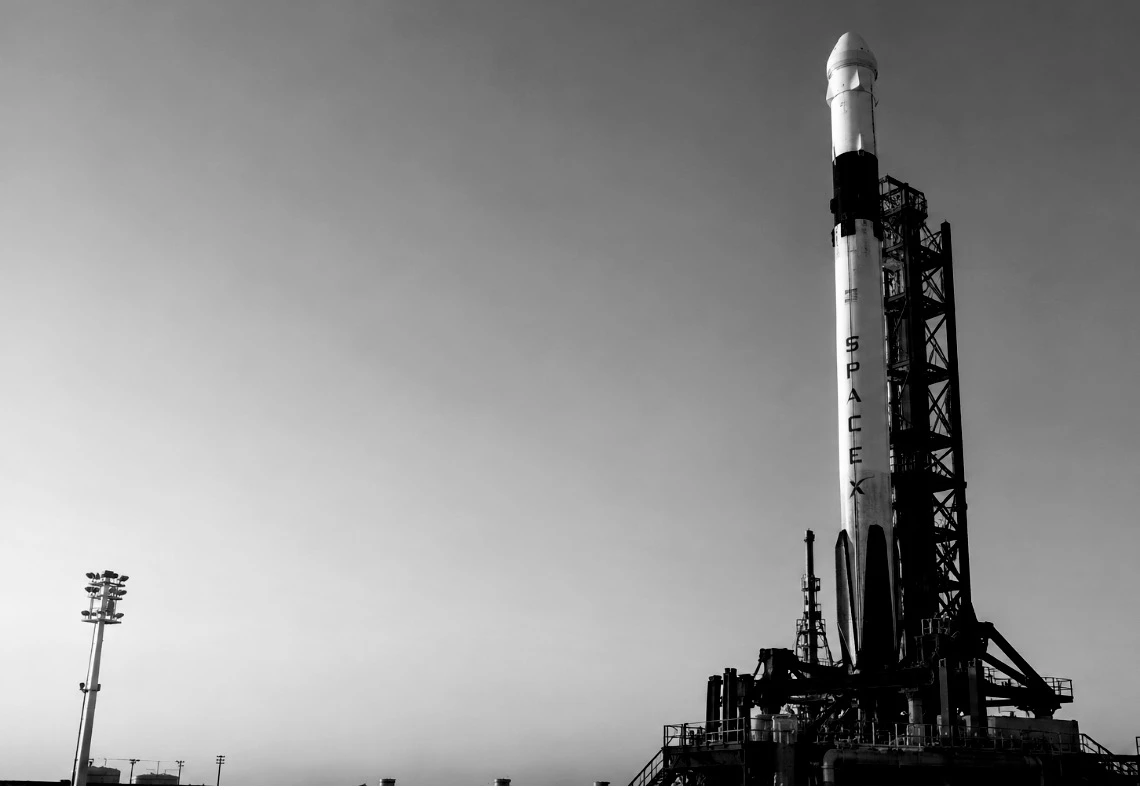
There is also a wider consequence for access to space. As launch cadence increases, the distinction between launch capability and launch availability becomes less useful. A state may possess a domestic rocket programme while remaining dependent upon foreign launch providers for commercially viable access to orbit; another may lack an indigenous launcher but secure reliable access through international procurement. For policymakers, the relevant measure of capability is consequently shaped by the degree of control a country exercises over the services on which its space activities depend. Conclusively SpaceX's 600th flight-proven booster launch provides an unusually clear illustration of that transition. The achievement belongs to a particular company and a particular vehicle family, but its significance extends to the assumptions on which launch policy has traditionally been built. Launch vehicles were once treated principally as high-value hardware produced for individual missions. Falcon 9 has helped establish a different operating model in which the vehicle, its facilities, its customer base and its downstream constellation form a continuing commercial operation, and that model may not always become the standard for every launch provider. Different strategic requirements or vehicle architectures will produce different economics. The more immediate policy lesson is that reusable launch has changed the conditions against which new entrants must compete.