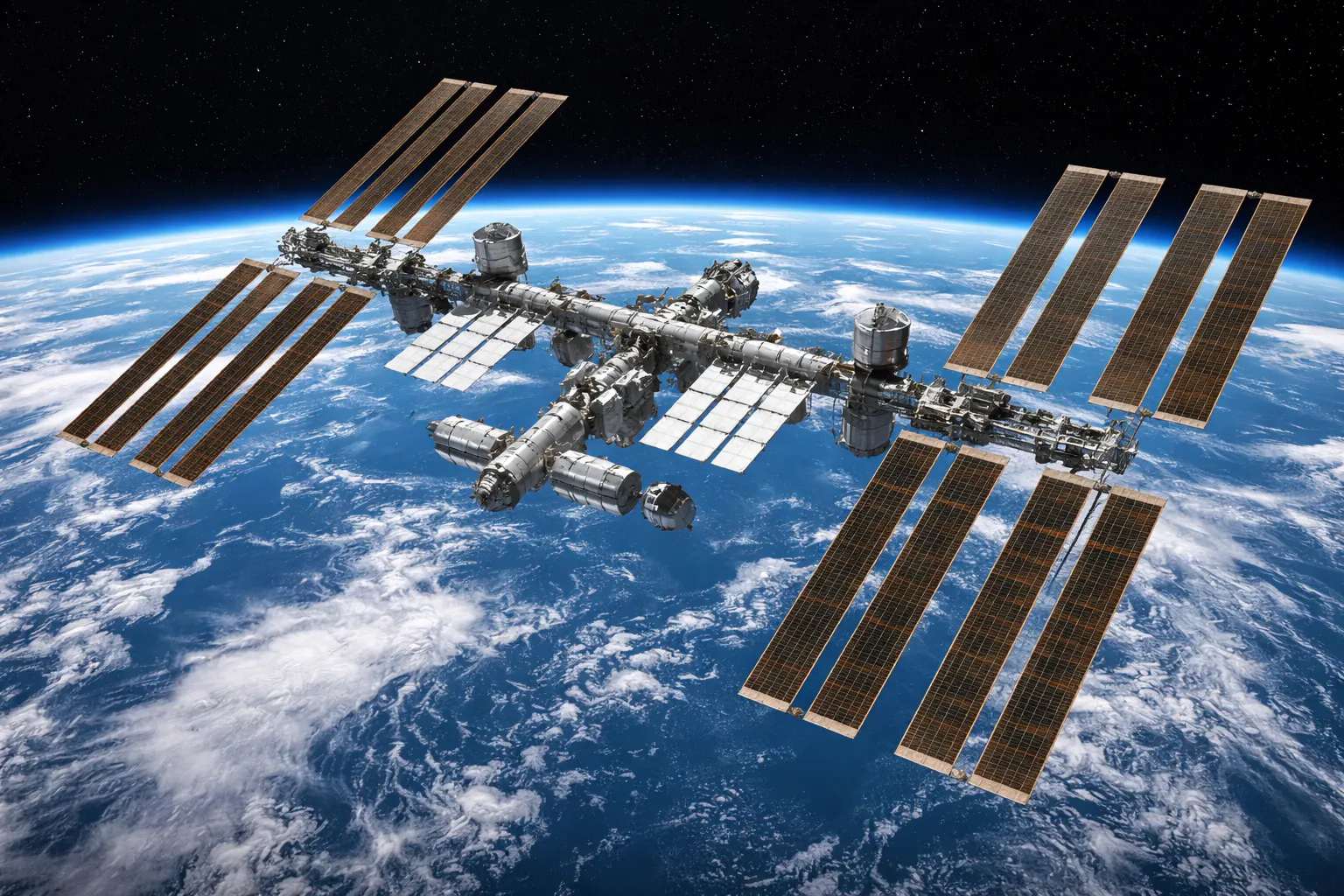
In March 2026, Progress MS-33, a familiar workhorse in the space launch scene, returned to operation. Its launch from the Baikonur Cosmodrome marked the 186th flight of a spacecraft lineage that has sustained human life in orbit for nearly half a century. In both its execution and some of its complications, this mission has revealed the enduring architecture of space infrastructure, built on reliability under pressure.
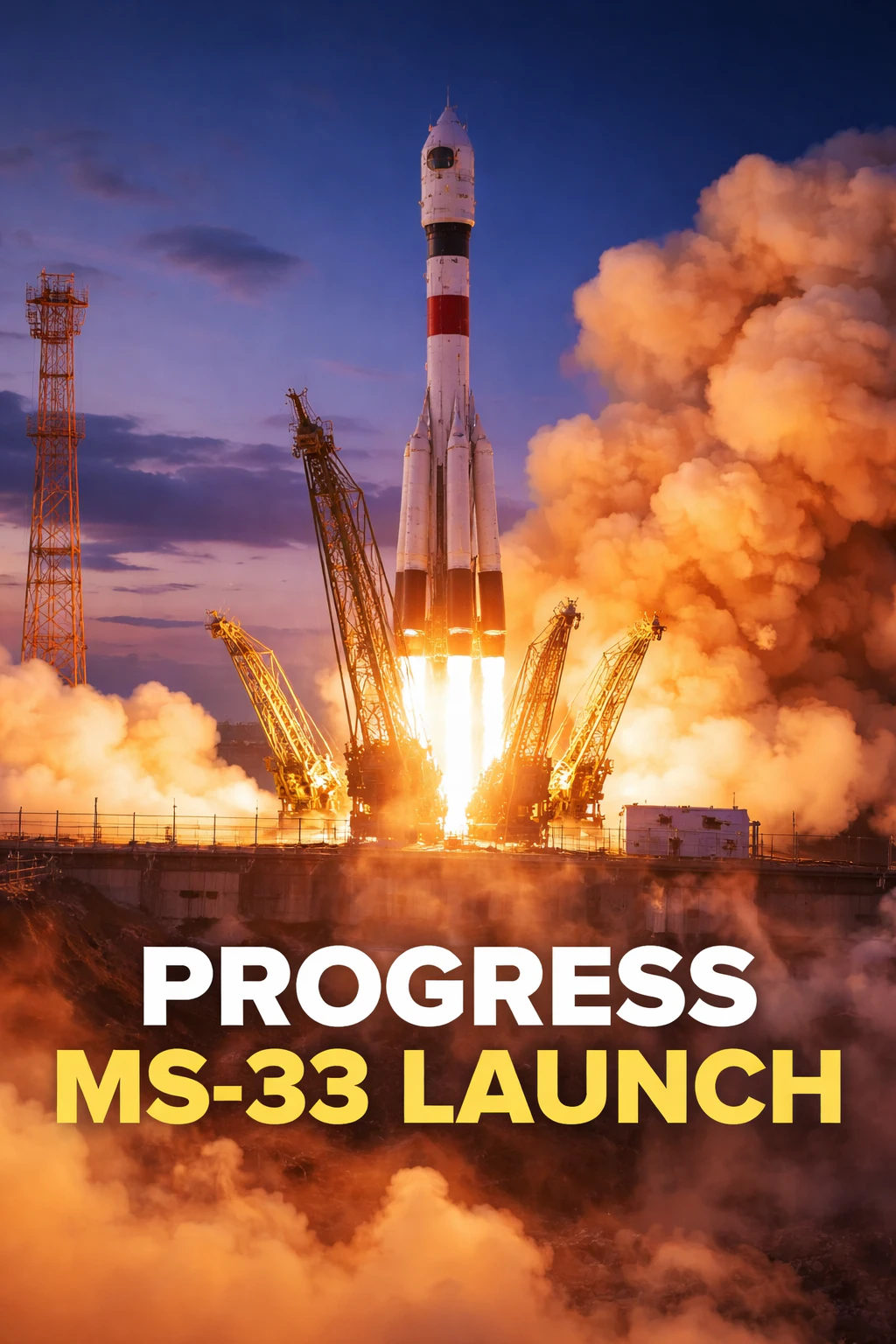
Progress MS-33 launched on the 22 March 2026 aboard a Soyuz-2.1a rocket, carrying approximately 2,509 kilograms of cargo to the International Space Station (ISS). It transported almost 3 tons of essentials for orbital life.This consisted of about 619 kilograms of food, 420 kilograms of water, and 828 kilograms of propellant with the remainder taken up by scientific equipment, each kilogram a reminder that human presence in space remains fundamentally dependent on logistics.
The launch, which was originally scheduled for December 2025, was delayed after severe damage was caused to Site 31 at Baikonur. The damage resulted from the launch of a previous crewed Soyuz mission which collapsed the mobile service structure beneath the pad into the flame trench. This rendered Russia’s primary launch facilities temporarily inoperable. Repairs ultimately took four months to conclude, during which time NASA had to make adjustments to its own resupply schedule, advancing commercial cargo missions to ensure continuity of operations aboard the ISS.
This sequence of events revealed an often overlooked aspect of missions which is that space systems are only as resilient as their infrastructure on the ground. Launch cadence is in practice constrained by physical assets such as pads and integration facilities. This means that a single failure point on Earth will have potential ripple effects across an entire orbital value chain/ecosystem.
When MS-33 was finally able to launch, the mission encountered another challenge. One of its antennas responsible for rendezvous and docking, failed to deploy, preventing use of the Kurs automated docking system. The spacecraft ended up halting approximately 200 metres from the station, and from there, cosmonaut Sergey Kud-Sverchkov manually guided the vehicle to docking using the TORU system. As it stands, space endeavour is increasingly being defined by autonomy, so in this particular case, the failure highlighted the importance of redundancy in human spaceflight. Which is why automated systems can never be optional for space, as they accelerate operations and provide a consistent failsafe where human oversight may be unavailable.
The Progress spacecraft itself embodies this philosophy, having first flown in 1978 to support the Salyut programme. It has evolved incrementally through successive generations without abandoning its core architecture, having supported the Salyut, Mir and now the ISS. Derived from the Soyuz crew vehicle, it retains a modular design capable of transporting pressurised cargo, amongst other resources, and able to carry a total launch mass of roughly 7.3 tonnes, and a payload capacity of about 2.5 tonnes. It is neither the largest nor the most advanced cargo vehicle in operation, however it is among the most dependable so far. Progress MS-33 is deliberately expendable, in favour of prioritising operational certainty. After concluding its mission, it is often filled with waste and deorbited to burn up in Earth’s atmosphere. There is no recovery cycle designed to minimise risk and maximise predictability.
In contrast, other cargo systems servicing the ISS reflect different design philosophies. SpaceX’s Dragon on one hand, introduces reusability and the ability to return cargo to Earth. Northrop Grumman’s Cygnus on the other hand, provides flexible cargo capacity, but remains expendable. Progress thus occupies a distinct position within this ecosystem, as a baseline system that prioritises reliability over innovation. Together however, these vehicles form a diversified logistics network, ensuring that no single failure disrupts the entire station’s lifeline.
And yet MS-33 sits at the intersection of geopolitics. The ISS remains one of the few arenas where cooperation between Russia, the United States and their partnership continues uninterrupted. Despite tensions on Earth, crew rotations and cargo deliveries persist, governed by mutual dependence. The delay of MS-33 illustrates just how deeply interconnected this system has become. A disruption in Russian or other launch capability prompts adjustments to NASA’s schedule, highlighting a shared responsibility for sustaining life in orbit. This goes beyond mere cooperation in the abstract, but reflects a deeper coordination relationship especially under constraints. Any failure to align accordingly would have immediate operational consequences.
At the same time, the mission also underscores the fragility of that interdependence. The damage to Baikonur exposed the risks of having infrastructure concentrated between a few vendors, while the in-flight anomaly itself demonstrated the limits even of mature systems. Once again, redundancy would help mitigate this risk but it does not completely eliminate it. The solution then is to create additional systems which absorb mission risks. In this respect, the Progress MS-33 mission offers a powerful lesson on continuity. The ability to deliver supplies, maintain systems and sustain human presence over time is what transforms space from a frontier into a workable, liveable environment, and Progress has been supporting that transformation for decades.
As the space industry moves toward greater commercialisation and complexity, this model is becoming increasingly relevant. High cadence launch and orbital logistics platforms, as well as multi-orbit infrastructures all depend on a common principle: systems must not only work, but continue to work under pressure. Accordingly, Progress MS-33 did not introduce a new technology or redefine boundaries. It simply demonstrated instead that the value of space systems lies in its ability to be tested, to adapt and to be resilient in the face of disruption.