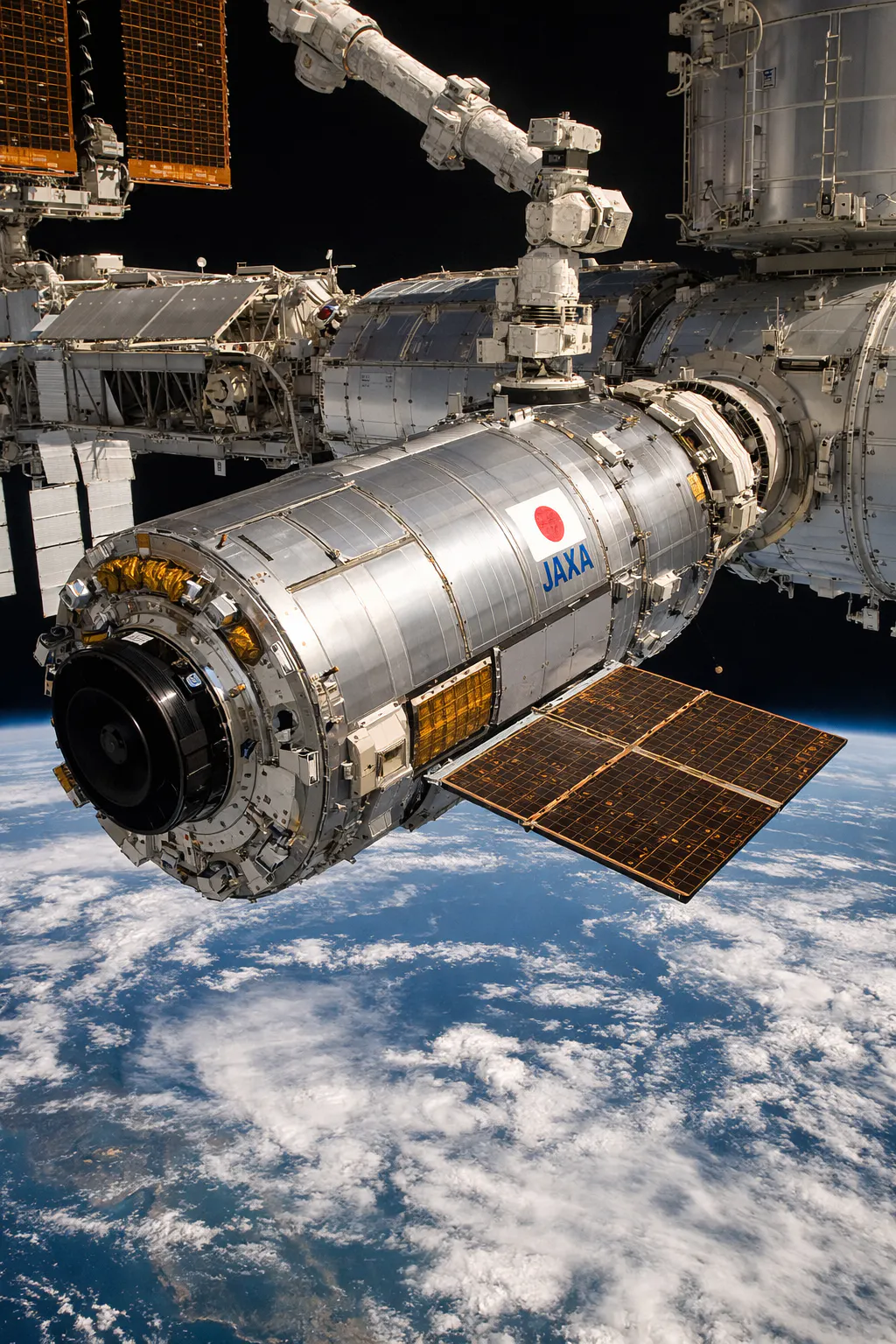
Orbital logistics are emerging as a service infrastructure necessary for the ongoing maintenance of space objects and platforms in orbit. Japan’s HTV-X1 recently demonstrated how advanced cargo vehicles are reshaping supply chains in Low Earth Orbit (LEO), with implications for science, commerce and national space policy.
Space operations in LEO, including the over 25 years of continuous human presence on the International Space Station, have made outer space a hot bed for scientific research and commercial infrastructure. HTV-X1 is perhaps the latest demonstration or orbital ingenuity, offering Japan a next generation cargo spacecraft capable of combining both resupply and orbital research. As with terrestrial supply chains, extraterrestrial supply chains or logistics in space require the same predictability in cadence, adaptability for multi-use platforms, and the integration of growth and scaling opportunities through research and development. Similar to shipping lanes on the high seas, space logistics help ensure transportation is seamless, and transportation vehicles like HTV-X1 thus become the “lifeforce” that sustains orbital ecosystems, feeding into the space value chain through the provision of commodities and services.
The HTV-X1 was launched on 26 October 2025 on an H3 rocket from the Tanegashima Space Center. It arrived and docked at the ISS on 29 October, carrying a payload of 4,080kg of food and supplies as part of a broader 6,000 kg capability. It was in fact the successor to the HTV/Kounotori series which concluded 9 successful missions between 2009 to 2020. The HTV-X1 served as a technical demonstration for future logistics operations such as on orbit experiments and small satellite deployments to name a few. It can be described as an expendable spacecraft, (unlike SpaceX’s Dragon) meaning it focuses on one-way delivery and on-orbit experimentation. It will therefore not be recovered or reused when the mission is complete.
The vehicle departed from the ISS on 6 March 2026, using the Canadarm2 robotic arm. It will thereafter have a post-ISS mission period of about 3 months, during which time it will conduct various experiments, before finally deorbiting and burning up in the atmosphere to ensure a safe reentry. Some of the key systems demonstrations that will incur during the post-ISS mission period include:
- H-SSOD - small satellite deployment
- Mt. FUJI - multiple reflector unit
- DELIGHT - lightweight planar antenna
- SDX - solar cell demonstration
HTV-X1 exemplifies how orbital logistics can be a scalable service ecosystem. Earlier ISS resupply vehicles were designed primarily for station support, whereas the HTV-X1 supports multiple capabilities. It not only delivers cargo, but also functions as a temporary science platform, in addition to deploying small satellites. It demonstrates that spacecrafts themselves are multi-purpose nodes in an orbital supply chain.
In comparison with other cargo systems, operational design influences service differentiation:
● Russia’s Progress is considered to be reliable and expendable, while focusing purely on resupply. It cannot return experiments back to Earth.
● Northrop Grumman’s Cygnus is also expendable, and carries capacity for limited on-orbit experiments. It is primarily a cargo vehicle.
● SpaceX’s Dragon is differentiated by its reusability, and is the sole transportation vehicle in the market capable of achieving this. It is also able to return both experiments and materials to Earth, supporting round-trip logistics.
● HTV-X1 compared to the rest, combines high payload capacity (~6,000kg) with the ability to act as a platform for extended experiments (up to 1.5 years post-ISS departure), as well as deploy small satellites.
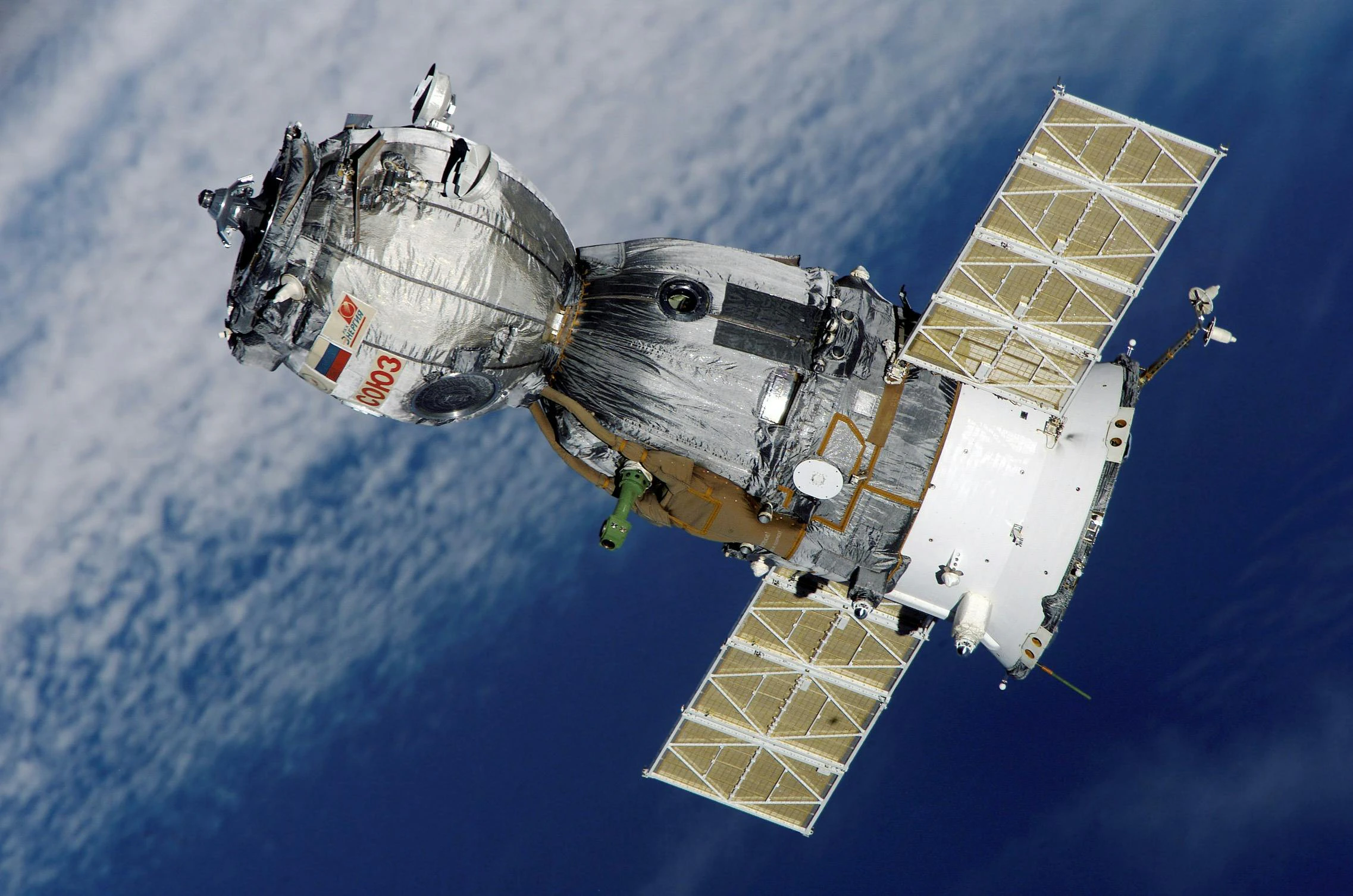
Though the sector is still emerging, domestic launch capabilities are vital in strengthening national security and building autonomy in orbital logistics. Having a variety of vendors across the globe reduces dependency on American or Russian launch services, which is strategically significant for long-term mission planning and aids democratisation of access to space. Varied approaches serve as a model for other countries developing end-to-end logistics ecosystems in LEO.
But despite the range of orbital logistics, some constraints do still exist. The fact that the same physical, industrial, regulatory and economic constraints apply to launch services as they do to orbital logistics is an indicator of a persistent policy gap. Such gaps exist as a result of the fast-moving development of new business models in space ahead of the development of the applicable laws and regulations that govern these activities. It goes without saying that the multilateral treaty system as well as national space laws and policies often fall behind the rapid development of space operators and services. This must however be addressed to ensure that access to space remains unfettered and beneficial for all humankind. In the absence of international coordination and standardisation, we cannot uphold the fundamental tenets of the outer space treaties and principles, which were established to ensure safe and sustainable space operations. In order to develop the market opportunities for dedicated orbital supply services, policies may have to be created or adapted to optimise costs and reliability.
Ultimately, however, HTV-X1 has showcased an alternative path toward commercial orbital logistics services, bridging the gap between resupply, science missions and small satellite deployment. In future, this will pave the way for the resupply of ISS and other orbital platforms to come, such as the Lunar-Orbital Platform-Gateway. By supporting the development of emerging technologies, private companies can also feed into government-led missions, and overall create a competitive service ecosystem in orbit. As previously mentioned, governance must evolve to support repeatable, multi-user orbital logistics while still maintaining safety and reliability standards. Regulatory and economic frameworks need to enable private companies to access orbital infrastructure efficiently, ensuring that orbital congestion and debris are minimised.
The specialised HTV-X1 is one of many transportation vehicles which are creating the foundation for commercial orbital logistics in space. Future policy and commercial frameworks can support the sector's scaling, and help stabilize the space supply chain. The challenge ahead is not just technical, it is also conceptual: how do we govern, sustain, optimise and scale the orbital economy without repeating the inefficiencies of Earth-bound trade? HTV-X1 offers a glimpse of that future, where logistics and space are inseparable. If orbit becomes the new industrial “highway”, then every kilogram sent, every experiment deployed will be a test of how wisely we navigate this frontier. In a few decades, when orbital logistics is as routine as courier shipping, HTV-X1and other transportation vehicles may be remembered for the mindset it embodied, that is, that space is a continuous environment to innovate.