
In his famous address at Rice University in 1962, U.S. President John F. Kennedy declared that humanity would pursue space exploration "not because it is easy, but because it is hard." This lecture was held during the height of the Cold War, as space exploration became technologically feasible, and at the same time, a modest “grassroots” program emerged in Zambia. The intrepid Edward Nkoloso, seeking to inspire African participation in humanity's journey beyond Earth, coined the term "Afronauts" to describe an initiative intended to rival Western endeavors and reshape the narrative of African participation in space.While largely symbolic, this initiative represented an early articulation of Africa's desire to engage in the international space agenda.
More than 60 years after these early efforts, Africa's space journey has evolved considerably. Following initial satellite launches with international support, new milestones include the formation of continental governance structures like the African Space Agency (AfSA). Against this backdrop, the 2026 NewSpace Africa Conference, themed "Inclusive Growth: Expanding Space Benefits to All Africans," encourages reflection on translating technological progress into widespread societal gain. With this in mind, and referencing key policy and strategy documents, we evaluate how the following frameworks guide the growth of Africa's space industry:
● The African Space Policy & Strategy
● Agenda 2063
● Science Technology and Innovation Strategy for Africa (STISA) 2024
Collectively, these documents underscore that space economies are not defined by technology and policy alone; rather, success depends on developing markets, skills, and public imagination around space benefits. Before delving into the specific dimensions needed for an inclusive ecosystem, it is important to introduce a framework: space ecosystem development can be measured along six distinct metrics namely: Policy, Commercial, Education, Outreach, Tech, and R&D. With the policy underpinnings in place, we now discuss how these elements contribute to inclusivity and sustainable development.
Policy
The AfSA has been established, with accompanying continental data initiatives such as Digital Earth Africa and the GMES & Africa program coordinating the uptake of EO products and services. DEA alone has the potential to generate up to $1 billion in value for the continent if fully utilized. Additionally, national space policies are increasing in Kenya, Nigeria, Egypt, and South Africa. African nations currently suffer from fragmented markets, regulatory inconsistency, and small national budgets. By collaborating under continental policy and institutional mandates, efforts can be coordinated and credibility raised in the international community. This will harmonize regulatory aspects such as spectrum management and procurement models, and act as a vital tool for de-risking private investment in space. Therefore, creating predictable environments for innovation in space will also encourage indigenous participation.
Commercial
The 2000s were a watershed period for the African space industry, with numerous private and government players contributing to international space missions. The African space economy has now reached a total market valuation of USD24.95 billion, a key indicator that the business of space in Africa is profitable and worthwhile for generating a return on investments made. These investments have translated into tangible and intangible benefits, including the launch of a total of 69 satellites by 19 countries, and the provision of products and services by at least 321 NewSpace companies operating across both the upstream and the downstream, 95% of which are in the private sector. The economic activity within the industry has also resulted in job creation for at least 19,000 people, in key market segments like Earth Observation (EO), Global Navigation Satellite Systems (GNSS) and Satellite TV, to name a few. These endeavors shifted the continent's stance from a passive beneficiary of space products and services to an active contributor. Fostering continuous momentum in the commercialization of space requires SME integration through entrepreneurial opportunities and PPPs, allowing for the development of new technologies that mitigate service dependency.
Education
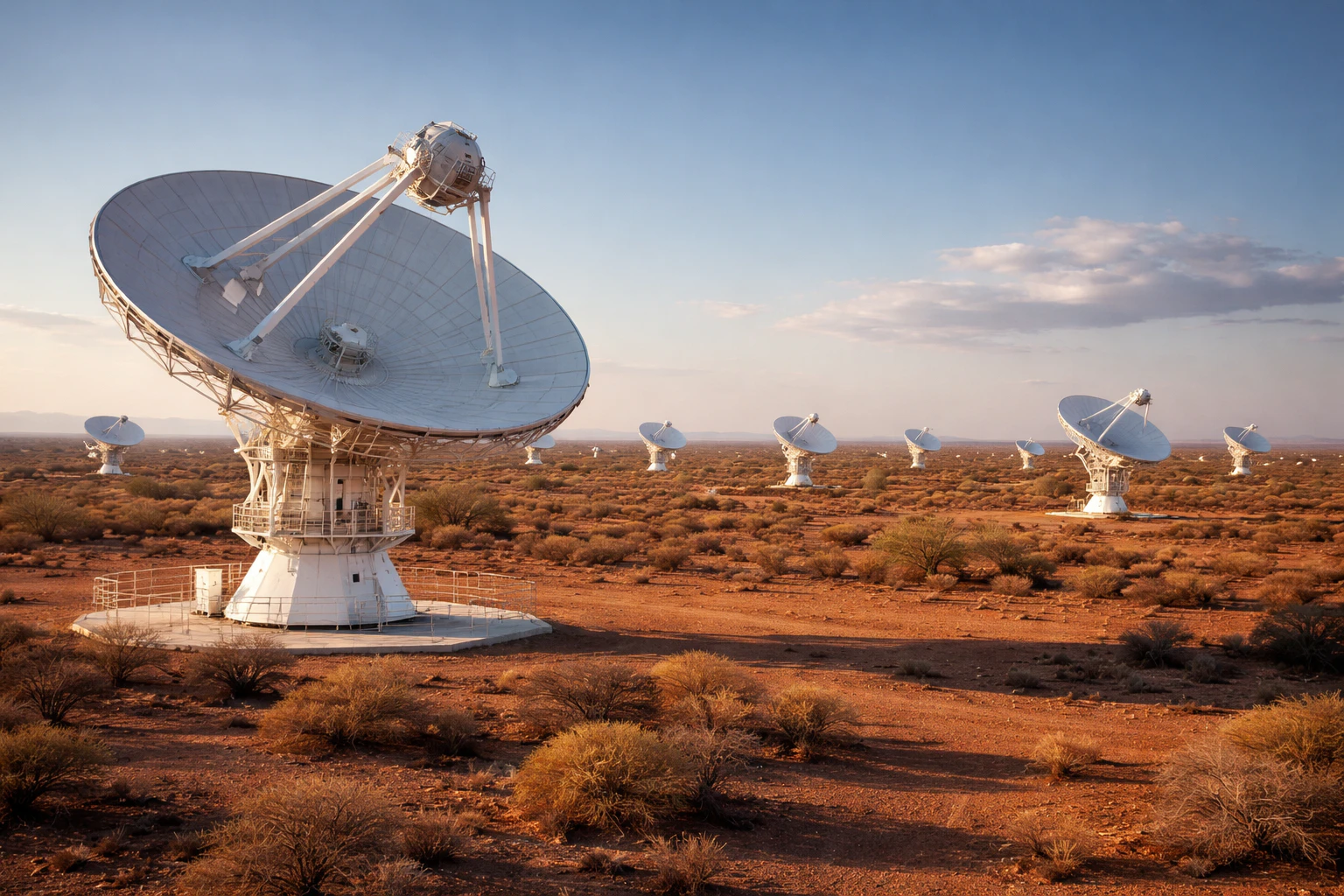
Africa suffers more than most regions from brain drain, with only a limited number of African universities offering specialised space-related degrees. To combat this, viable opportunities to gain expertise through technical pipelines in satellite engineering, space law, and astronomy are required to keep the population skilled and competent in navigating the evolving dynamics of the industry. It is common cause that the current space education system is weighted toward the geospatial sciences for its responsiveness to urban and rural needs; however, developing the requisite and robust institutional capacity can help maintain autonomy in space once international partnerships have lapsed. Currently, the Pan-African University (PAU) operates as a network of institutes that partner with industry players to provide engineering and technology training and solutions. There are a number of university-led programmes, as well as international partnerships at scale. The Square Kilometre Array (SKA), which involves €1.5 billion investment, positioning Africa at the center of global astronomy, can be described as the world’s largest scientific experiment, and will revolutionise humanity’s understanding of the universe, including galaxy formation and the early history of the cosmos.
Outreach
Serving the community is a crucial component of space endeavor, deriving from the principle of common heritage. One aspect where space technology remains critical in African societies is through access to satellite-based early-warning systems, which make use of critical connectivity and data tools to keep populations safe; for instance, Kenya's Early Warning For All system, launched by the Red Cross and the UN.The GMES & Africa program, backed by 30 million Euros from the EU, also represents a community-benefit partnership between the AU and the EU, which uses EO satellite data to monitor and manage resource degradation. For this reason, raising awareness is vital to democratizing access to space for all. The engagement of the youth and the community inspires the next generation, and is achieved through competitions such as the Africa Earth Observation Challenge (which sources entrepreneurship) and the Space Generation Advisory Council, which mobilizes over 25,000 students and young professionals around the world to speak on various space-related issues.
R&D
The rapid expansion of innovation hubs across the continent demonstrates the utility of prioritizing applied research; after all, the industry is premised on the application of space and satellite systems to further efficiency in precision agriculture, disaster management, and other areas of resource efficiency, for example. To be effective, innovation hubs should be clustered around essential ground infrastructure in order to foster localized growth and thus align space activity with national development agendas such as Agenda 2063. To this end, and as already mentioned, partnerships such as the SKA, as well as national satellite programs, demonstrate that the ability to convert scientific ideation into infrastructure will foster research capacity.
Tech
Technology can be described as the engine that turns policy from mere rhetoric into functional space-based assets. Indigenous technological capability is advancing; most recently, Botswana launched its first satellite, BOTSAT-1, in 2024 (an EO tech demonstrator). Similarly, Senegal also joined the space race with the launch of its first satellite, GaindeSat-1A, as part of a broader national program designed to support environmental monitoring and public sector data needs. Kenya also became the only African country to secure opportunities for scientific experimentation aboard China’s Tiangong Space Station. The ability to create technology that solves contextual challenges is what reinforces the commercialization of the industry, and thus regional programs need to enable the local industry to produce satellite platforms and ground-segment components that can be offered to both regional and international markets, thus reducing the risk of supply chain dependency and also the reliance on imported services. In fact, it is this node that serves to turn African space inspirations, such as those of Edward Nkoloso, the main national space programs, and the spirit of the African space policy and strategy, into tangible, home-grown technology for the greater good.
Policy Recommendations for Inclusive Growth
In order to ensure inclusive growth in Africa, the continent should consider the current structural impediments. Firstly, space remains a capital intensive industry that requires creative alternative funding mechanisms to stabilise national budgets and avoid over-reliance on donor-driven projects. Secondly, Africa should position itself to diversify its geopolitical partnerships by strengthening South-South cooperation and thereby learn from analogous space programs. Thirdly, the private sector should be incentivised to innovate in space through appropriate tax breaks, PPPs and regional innovation clusters, as this serves to promote local capacity. Fourthly, education and outreach should be measured against set outcomes, especially through tracking of graduate retention rates and community participation. Finally, locating R&D hubs around essential infrastructure will not only align them with Agenda 2063, but will also ensure that innovation is in a position to directly support key sustainable development segments. Taken together, these measures would create a robust strategy towards harmonising the policy, commercial, educational and technological initiatives into an inclusive African space ecosystem.
In conclusion, the challenge facing the African space sector is whether the continent's participation can translate into inclusive development, since competency has already been proven. Africa’s space future will thus lie in its ability to integrate space activity into everyday life, beyond mere launch and symbolic milestones. To this end, if Africa can continue to foster the policy prescriptions in the continental and institutional frameworks, then the pioneering imagination of many such as Edward Nkoloso, and the spirit of Kennedy’s call to pursue the “hard challenges will find their full expression, not only in orbit, but in the tangible benefits felt by citizens across the continent.