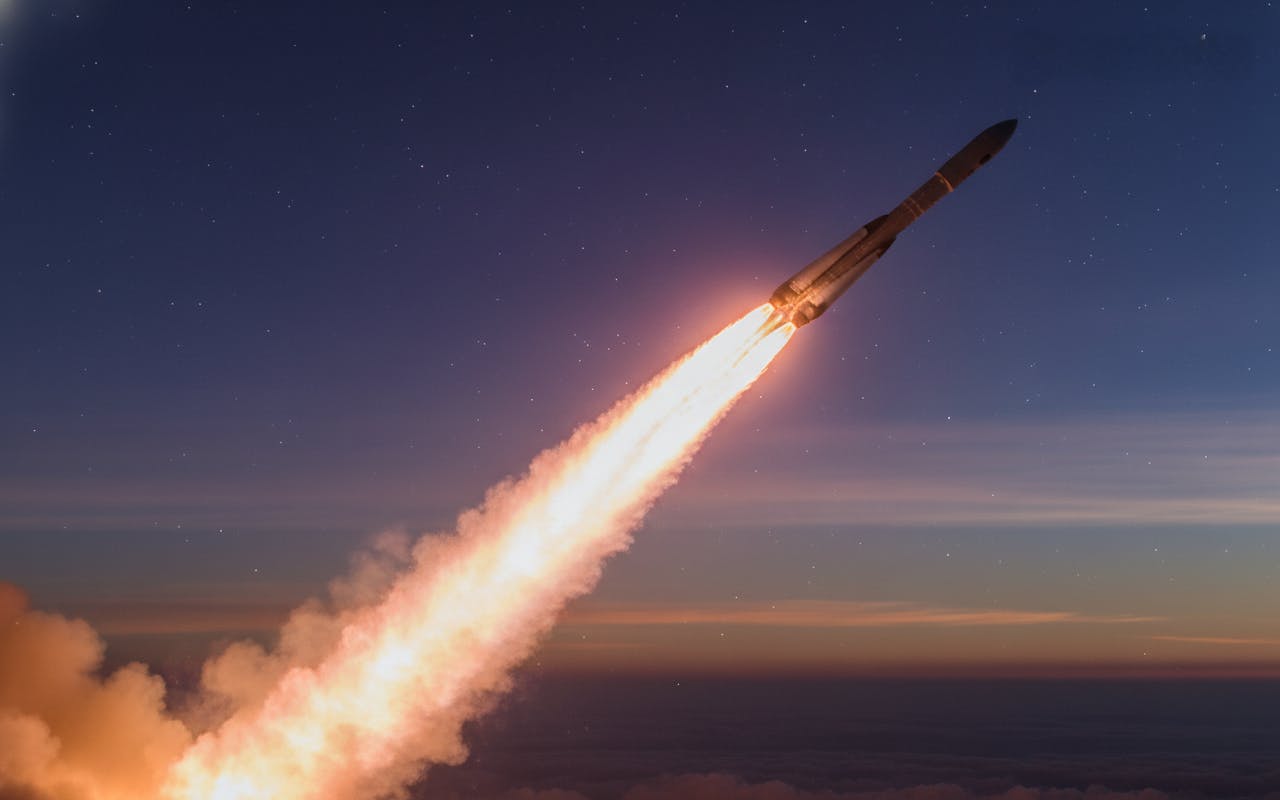
The emergence of the non-geostationary (NGSO) megaconstellations have triggered an evolution of satellite services leading to new connectivity options looking to revolutionize communications. This new technology has resulted in the rapid growth of another related industry, the launcher industry.
The number of rockets launched in a year has been surging. Annual orbital launch counts rocketed from an 82-per-year average in 2008–2017 to well over 180 by 2022. In fact, 2022 saw a then-record 186 orbital flights. This trend only continued to accelerate, still to keep pace with demand, into 2024–2025. Independent analysts reported 221 orbital launches in 2023 and 263, the highest ever total, in 2024.
The majority of these missions used medium-lift rockets (roughly 2–20 metric tons to low Earth orbit), reflecting the global appetite for NGSO small-sat constellations. By contrast, the heavy-class rockets which can carry tens of tons remain largely government-driven.
Reusable rocket technology and high flight rates have driven down costs and opened orbit to more customers. In 2024, commercial launchers supplied about 70% of all global launch attempts, which is a 15% increase from 2022. This demonstrates that the private sector now dominates the launch market in terms of quantity of launches.
However, demand continues to grow as new satellite operators enter the market and legacy operators enter new segments or scale up their existing constellations. This has resulted in a boom of commercial space firms around the world racing to meet this demand. Dozens of private and startup launch companies from North America and Europe to Asia now offer rockets of all sizes. These range from new small orbital vehicles for CubeSats weighing only hundreds of kilograms, up to heavy boosters capable of hauling multi-ton satellites.
For example, the United States and New Zealand firm Rocket Lab launched its Electron rocket, a two-stage semi reusable launcher, 73 times with 69 successful missions. Relativity Space is testing its partially 3D-printed Terran series, with a test launch scheduled for 2026.
In Europe, German and British startups (Isar Aerospace, Skyrora, Orbex) are developing medium-lift vehicles, while in Asia companies like India’s Skyroot/Agnikul and China’s Galactic Energy/i-Space have debuted small solid fuel and liquid-fueled rockets.
Many countries without established launch industries such as Japan, Brazil, and the UAE are nevertheless fostering domestic providers or foreign partners as well. These new entrants often emphasise rapid production through methods like industrial 3D printing and a focus on reusability. The importance of reusability has been well demonstrated by Space X where frequent reuse of first stages has cut costs, making orbit more accessible than ever.
For context, the smallsat revolution means most payloads today are lightweight. In 2023, 68% of the 2,938 satellites launched weighed under 600 kg. A single small-lift launcher (under 2 tons to LEO) might carry a few dozen smallsats. A medium-lift booster (2–20 tons) can lift multiple tons; and a heavy/super-heavy launcher (more than 20 tons) is reserved for very large satellites or human missions.
Prices scale with these classes, but across all the launch categories, costs are falling. Leading launchers like SpaceX’s Falcon 9 offer reuse and rideshare deals, a dedicated Falcon 9 launch is on the order of $60–70 million today. This puts the cost per kilogram in the low thousands of dollars, a significant decrease from less than 10 years ago. Many small sat launchers are now targeting a dedicated launch of under $10 million.
These new launchers have also coincided with a demand for launch sites to meet schedules leading to a revival of sea-based launches, led in large part by China. Starting in 2023, Beijing-backed companies have been launching rockets from floating platforms in the Yellow Sea. By mid-2025 China had completed 16 such maritime launches using four different rockets (Long March 11, Smart Dragon-3, Ceres-1 and Gravity-1). These sea-platforms allow launches near the equator which boosts payload capacity. For example, the Smart Dragon-3 solid rocket launching from the fixed ocean pad off Haiyang can deliver about 1,500 kg to a 500 km sun-synchronous orbit. Galactic Energy’s Ceres-1 has flown multiple barge launches carrying IoT constellations, placing ~300 kg into sun-synchronous orbit each time.
Outside China, sea-launch concepts remain rare but interest is growing. The old multinational Sea Launch platform has been idle since 2014, and European efforts to field ocean pads had largely stalled until recently.
In 2024 the global launch industry was already a roughly $13.6 billion market , growing roughly 12–13% per year. Investors globally have poured over $347 billion into space startups since 2009₇. However, as mentioned, most of this growth is currently dominated by the smallsat industry with super-heavy launchers being relatively rare but are poised for growth as deep-space missions and large satellites come online.
Looking ahead, many predict continued rapid growth with the demand for LEO constellations alone being astounding. Goldman Sachs estimates see 70,000 new LEO satellites launching in the next five years. The number of annual launches thus may continue rising (already 2024 was a record 263 attempts). In Asia, Japan targets 30 domestic launches per year by the early 2030s, and India continues to expand its launch rate, developing a small launcher to complement its established PSLV.
It is clear that the rocket launch sector is undergoing a global renaissance. New companies and novel launch methods (from air-and sea-launch to rapid reuse) have multiplied capacity and competition. New spaceports on every continent are coming online, decentralising access. For satellite operators this means more choices and potentially lower prices. For businesses it may herald a booming opportunity in supply chains and services. Regional power shifts seem under way too. The U.S. and China remain launch leaders, but Europe, Asia and even Africa are rapidly building their own capabilities. Industry analysts expect the space launch market to keep expanding, driven by megaconstellations and national security needs. In short, the next few years will see not only higher launch rates but also a broader set of actors competing to send our new satellites to orbit.